Monday, November 9, 2015

Week #12 (11/9-11/13)- Russian plane crash: ISIS chatter supports bomb theory, officials say (CNN)

(CNN)ISIS' affiliate in Egypt says it brought down Metrojet Flight 9268. And U.S. officials are more confident that terrorists bombed the Russian plane.
Yet key questions remain: If terrorists did plant a bomb, how did they do it? And what could prevent that from happening again?
    Here's the latest on what we know about the disaster that killed 224 people:

    The bomb theory

    Can detonated bombs be found?
    Can detonated bombs be found? 02:39
    Several senior U.S. intelligence, military and national security officials have told CNN about the growing confidence that the plane was bombed by terrorists.
    One official said it was "99.9% certain." Another said it was "likely."
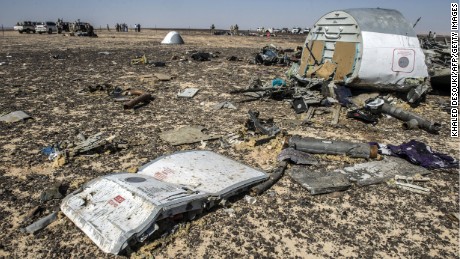
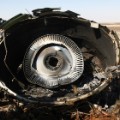
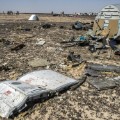
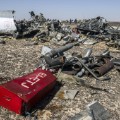
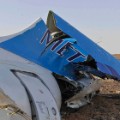
    The plane was headed from the Egyptian resort city of Sharm el-Sheikh to St. Petersburg, Russia, on October 31. But not long after takeoff, it disintegrated midair and crashed in the Sinai Peninsula.
    Egyptian officials, who are leading the main crash investigation, haven't expressed as much confidence in the bomb theory.
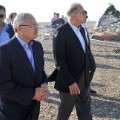
    "All the scenarios" are still on the table, said Ayman al-Muqaddam, the head of the investigation.
    "We don't know what happened exactly," he said.
    The Egyptians aren't the only ones involved. Experts from Russia, France, Germany and Ireland -- countries that are connected in various ways to the Airbus A321-200 that crashed -- are also investigating.
    Kremlin spokesman Dmitry Peskov confirmed to reporters Monday that the UK had provided Russia with data on the downing of the jet.
    Meanwhile, talks between U.S., Russian and Egyptian officials about the potential scope of American assistance in the investigation are ongoing. U.S. law enforcement officials told CNN that the FBI is already offering limited support but has no plans at present to send a team to the region.
    Russian state news agency RIA Novosti reported Monday that Russian experts may receive the first forensic analysis data potentially revealing traces of explosive substances on the wreckage as early as Thursday. But more definitive conclusions could take longer, according to the report.

    Sources: Israel provided intercepts

    At least some of the intelligence intercepts being used to assess what happened to the jetliner came from Israeli intelligence, according to a U.S. official briefed on the intelligence as well as a diplomatic source.
    The communications were captured by Israeli intelligence focused on the Sinai and passed along to the United States and Britain, the sources said.
    Israeli officials would not comment on the claims.
    Muqaddam said Egypt had not been provided any information or evidence tied to reports suggesting that a bomb took down the flight, and he urged the sources of the reports to pass along related evidence to Egyptian investigators.

    ISIS chatter analyzed

    Bedouins willing to fight ISIS in Sinai
    Bedouins willing to fight ISIS in Sinai 02:22
    The belief that a bomb was most likely to blame centers, to a large extent, on British and U.S. intercepts of communications after the crash from the Islamic militant group ISIS' affiliate in Sinai to ISIS operatives in Syria, officials said.
    The Sinai affiliate has publicly claimed responsibility for downing the plane, but so far hasn't explained how it was done. That's prompted questions about the claim among some observers, considering ISIS' tendency to often publicize its acts for propaganda value.
    The ISIS messages monitored by British and American intelligence agencies are separate from the group's public claims, a U.S. official has said.
    The two Western countries have been analyzing the specific language in the chatter to determine to what extent the operatives were talking about the type of bomb and detonator used, and whether that language was a true representation of what happened, one official told CNN.
    Several officials said it's the specificity of the chatter that has contributed to the U.S. and British view that a bomb was most likely used.

    Mysterious noise

    Report: Black boxes indicate no accident
    Report: Black boxes indicate no accident 01:42
    European investigators who analyzed the plane's cockpit voice recorder and flight data recorder say the crash was not an accident, CNN affiliate France 2 reported.
    The investigators said the cockpit voice recorder indicates an explosion, and the flight data recorder shows the blast was not accidental, the affiliate said.
    But Muqaddam, the head of the investigation, did not echo those details.
    He confirmed a noise was heard in the final second of the cockpit recording as the aircraft was on autopilot and ascending. But he offered no description of the sound, saying a specialized analysis would be carried out to identify it.
    The crash might have been caused by a lithium battery or a mechanical issue, Muqaddam said.
    He also said that bad weather has hampered the investigation.

    More victims identified

    Russians remember the victims of Metrojet crash
    Russians remember the victims of Metrojet crash 02:30
    The remains of more than 100 victims have been identified through DNA testing, Russian Deputy Prime Minister Olga Golodets said, according to the state-run RIA Novosti news agency.
    The vast majority of the passengers were Russian. The others were of Ukrainian, Belarusian or unconfirmed citizenship.
    Russian media said the disaster created many orphans, as many parents left their children with relatives as they went on vacation to Sharm el-Sheikh.

    Monday, November 2, 2015

    Week #11 (11/2-11/6)- Southern California water agency moves ahead with Delta land purchase (Sacramento Bee)


    Week #11 (11/2-11/6)- Students should brace for longer, more difficult SAT (Sacramento Bee)


    Week #11 (11/2-11/6)- Supreme Court Takes On Racial Discrimination In Jury Selection (NPR)

    The U.S. Supreme Court wrestles Monday with a problem that has long plagued the criminal justice system: race discrimination in the selection of jurors.
    "Numerous studies demonstrate that prosecutors use peremptory strikes to remove black jurors at significantly higher rates than white jurors."
    Those are not the words of the defense in the case. They come from a group of highly regarded prosecutors, Republican and Democrat, conservative and liberal, who have filed a friend-of-the-court brief siding with Timothy Foster, who was convicted and sentenced to death in the killing of an elderly white woman in Georgia.
    It has been nearly 30 years since the Supreme Court sought to toughen the rules against racial discrimination in jury selection. But Foster's lawyers argue that black jurors were systematically excluded from the jury at his trial in 1987, while judges at all levels looked the other way for nearly three decades thereafter.
    Jury selection is done according to a set of rules. Prospective jurors are usually questioned by both prosecution and defense lawyers and then winnowed down in two different ways. First, the judge removes, "for cause," those jurors deemed incapable of being impartial. Next, each side, prosecution and defense, has a set number of peremptory strikes, meaning that a certain number of prospective jurors can be eliminated without a stated reason, or for no reason at all.
    In 1986, the Supreme Court added a third step in a case called Batson v. Kentucky. Under the Batson rules, if the defense could show a racial pattern in prosecution peremptory strikes, the prosecutor would have to justify each one by demonstrating a nonracial reason for eliminating the juror.
    Still, prosecutors found ways to get around this new rule, as demonstrated by an infamous training video made in Philadelphia in the late 1980s after the court's decision in Batson. The video features then-Assistant District Attorney Jack McMahon advising trainees that "young black women are very bad, maybe because they're downtrodden on two respects ... they're women and they're blacks."
    He goes on to recommend avoiding older black women, too, as well as young black men, and all smart and well-educated prospective jurors.
    But, McMahon reminded the trainees that they had to come up with a nonracial reason for their strikes: "When you do have a black juror, you question them at length and on this little sheet that you have, mark something down that you can articulate at a later time if something happens," he says.
    Studies have shown that these proffered reasons are often a mere pretext for racial discrimination. A North Carolina study of jury selection in 173 death penalty cases found that black prospective jurors were more than twice as likely to be struck by the prosecution as similarly situated white jurors. A 2003 study of 390 felony jury trials prosecuted in Jefferson Parish, La., found that black prospective jurors were struck at three times the rate of whites. And in Houston County, Ala., prosecutors between 2005 and 2009 used their peremptory strikes to eliminate 80 percent of the blacks qualified for jury service in death penalty cases. The result was that half of these juries were all white, and the remainder had only a single black member, even though the county is 27 percent black.
    At Timothy Foster's trial in Rome, Ga., the prosecutor used four of his nine peremptory strikes to knock out all the qualified black jurors in the jury pool. The defense cried foul, but the trial judge and every appellate court after that, including the Georgia Supreme Court, accepted the nonracial reasons. The prosecutors gave as many as a dozen reasons for striking each black prospective juror. These justifications included things like "failure to make eye contact," looking "bored," being "divorced," or "a social worker," and so on.
    The appellate courts continued to accept these excuses even after Foster's lawyers obtained the prosecutor's notes in 2006 under the Georgia Open Records Act. It is rare that defense lawyers ever see these notes, and in this case, the prosecution's worksheets were not subtle.
    The name of each black prospective juror was highlighted in green, circled and labeled with a "B." At the Supreme Court on Monday, defense lawyer Stephen Bright of the Southern Center for Human Rights will tell the justices that everything about those notes reeks of racial discrimination.
    "They were referred to by B1, B2, B3," Bright says. "There were comparisons made among the black jurors that, if we have to take a black, maybe Ms. Hardge will be OK, or maybe Ms. Garrett will be OK. They didn't, of course, take either one of those."
    At Timothy Foster's 1987 trial, the names of prospective black jurors were highlighted in green, circled and labeled with a "B." The defense will argue that it reeks of racial discrimination. The state of Georgia's brief contends the jurors were labeled in order to be able to rebut potential allegations of racial discrimination. Editors note: Street addresses have been redacted by NPR.
    At Timothy Foster's 1987 trial, the names of prospective black jurors were highlighted in green, circled and labeled with a "B." The defense will argue that it reeks of racial discrimination. The state of Georgia's brief contends the jurors were labeled in order to be able to rebut potential allegations of racial discrimination. Editors note: Street addresses have been redacted by NPR.
    Courtesy of Squire Patton Boggs LLP
    Bright contends that the state of Georgia continues to change its story about the justifications. For example, prosecutors initially said they struck juror Eddie Hood because he had a son close to the defendant's age. Later, when it turned out that two white jurors had sons who were close in age, too, the prosecutor gave a different "bottom line" reason: Hood was a member of the Church of Christ.
    "They insisted that the Church of Christ took a strong position against the death penalty and that any member of the Church of Christ would vote against the death penalty," Bright says.
    In fact, the Church of Christ took no position on the death penalty; the prosecution notes reflect that, and Hood testified that he could vote for the death penalty.
    Then there was prospective juror Marilyn Garrett. The prosecution said it struck her because she was close to the age of the defendant. Foster was 19 at the time of trial, and Garrett was 34. In contrast, the prosecution accepted eight white jurors under 35, one of whom was only two years older than Foster.
    The state of Georgia refused to provide anyone to be interviewed for this story. But the state's brief says that any attempt to characterize the jury challenges as racially motivated "ignore[s] the multifaceted nature of jury selection." And the brief does provide a variety of reasons for each juror who was struck, reasons that the defense argues were not applied to similarly situated white prospective jurors.
    The state's brief contends that the only reason prosecutors labeled the race of the prospective black jurors was to rebut the anticipated race discrimination claim by the defense.
    No briefs have been filed in support of the state's position in the case. But, that earlier mentioned group of former state and federal prosecutors is urging the Supreme Court to invalidate Foster's conviction because of "blatant prosecutorial misconduct."
    They point to study after study showing that when it comes to getting rid of racial discrimination, the current system doesn't work. Prosecutors, they say, easily game the system by giving pretextual explanations, particularly in the South. In North Carolina, for example, prosecutors routinely handed out a one-page list of such reasons in training sessions.
    Judges seem to have a high threshold for seeing racial bias, even in supposedly liberal states. In California, for instance, the state Supreme Court has dealt with 114 Batson appeals since 1993, according to court opinions, and in only one case out of the 114 did the state's highest court find evidence of racial discrimination.
    "It's very hard politically with elected judges, very hard psychologically with judges and prosecutors who work together all the time, for a judge to make that finding," defense lawyer Bright says.
    It's also true that statistical studies show that more racially diverse juries are in fact more skeptical of the prosecution's case and less likely to impose the death penalty. A 2004 study by the Capital Jury Project found that in cases with a black defendant and a white victim, the chances of a jury imposing the death sentence were sharply lower if one or more black men served on the jury.
    Monday's Supreme Court case is widely viewed as a chance for the justices to once again rap the knuckles of the lower courts, but it's unlikely the court will be willing to establish hard and fast rules to prevent the kind of systemic discrimination that most in the criminal justice system acknowledge has plagued the courts from coast to coast.
    Most experts say the only way to do that would be to eliminate or drastically limit peremptory strikes, and that is a nonstarter for one simple reason. Most trial lawyers continue to believe these challenges are an essential tool for selecting a jury.

    Week #11 (11/2-11/6)- Mystery, confusion surround Russian plane crash in Egypt (Associated Press)
    ST. PETERSBURG, Russia (AP) — Mystery and confusion surrounded the final moments of a Russian jetliner that plummeted suddenly from high altitude to the Egyptian desert, killing all 224 people aboard. The airline Monday ruled out pilot error or a technical fault, but Russian aviation officials dismissed those comments as premature.
    Some aviation experts raised the possibility that a bomb on board the Metrojet Airbus A321-200 brought it down, while others cited an incident in 2001 when the aircraft grazed the runway with its tail while landing.
    James Clapper, the U.S. director of national intelligence, said that while there is no direct evidence of any terrorist involvement yet, it couldn't be excluded that the plane was brought down by Islamic State extremists in the Sinai Peninsula.
    "It's unlikely, but I wouldn't rule it out," he told reporters in Washington.
    Asked if a terrorist attack could be ruled out, President Vladimir Putin's spokesman, Dmitry Peskov, said: "No versions could be excluded."
    The Metrojet was flying at 31,000 feet over the Sinai when it crashed Saturday only 23 minutes after taking off from the Egyptian Red Sea resort of Sharm el-Sheikh for St. Petersburg with mostly Russian passengers.
    Metrojet firmly denied that the crash could have been caused by either equipment failure or crew error.
    "The only possible explanation could be an external impact on the airplane," Metrojet's deputy director Alexander Smirnov told a news conference in Moscow. When pressed for more details, Smirnov said he was not at liberty to discuss them because the investigation was ongoing.
    Asked if the plane could have been brought down by a terrorist attack, he said only that "anything was possible."
    But Russia's top aviation official, Alexander Neradko, dismissed the company's statement as premature and unfounded.
    In televised comments from Egypt, Neradko said it would be possible to draw conclusions about the crash only after experts examined the plane's flight data and cockpit voice recorders and studied the wreckage.
    He said the large area where debris were scattered indicated the jet had broken up at high altitude, but he refrained from citing a reason for the crash pending the investigation.
    Viktor Yung, another deputy director general of Metrojet, said the crew did not send a distress call and did not contact traffic controllers before the crash.
    Egyptian officials have offered conflicting accounts on whether or not the plane issued any distress calls.
    Experts say planes break up in flight usually due to one of three factors: a catastrophic weather event, a midair collision or an external threat, such as a bomb or a missile.
    A local affiliate of the extremist Islamic State group has claimed it brought down the aircraft, which crashed in the northern Sinai where the Egyptian military and security forces have battled militants for years. Both Egyptian and Russian officials have dismissed that claim as not credible.
    Still, the U.S., Germany and Britain all had overflight warnings in place for the Sinai. They advised airlines to avoid flying over the peninsula below 26,000 feet and to avoid the Sharm el-Sheik airport due to extremist violence and, notably, the use of anti-aircraft weapons.
    British military analyst Paul Beaver said he thought the crash was most likely caused by a bomb on board, because the IS hasn't been known to possess surface-to-air missile systems capable of striking passenger planes at cruising altitude.
    "That's a very serious piece of equipment, and I don't think they have that sophistication," Beaver said, adding that the Sinai desert is well-scrutinized by intelligence agencies, so a missile system would have been seen.
    Robert Galan, a French aviation expert, said Metrojet's claim of an "external impact" pointed to two possibilities: a bomb or sabotage.
    "Either a bomb was placed during the stopover and programmed to explode after takeoff, or a mechanic sabotaged the plane," he said. "These are the two most probable hypotheses."
    Sabotage would require familiarity with the electrical or fuel systems of the A321-200, but hiding a bomb would need less knowledge, he added.
    Galan said an analysis of the plane's data and voice recorders — the "black boxes" — will not confirm either a bomb or sabotage, as it records only the pilots' communications and technical readings. But he said investigators could know within 48 hours whether a bomb downed the jet because the debris would show traces of explosives.
    The plane's operator has a spotty safety record and was rebranded recently in the wake of another deadly accident. The airline, registered as Kogalymavia, changed its trade name to Metrojet after one of its Tu-154 jetliners caught fire in 2011 while taxiing before takeoff, killing three people and injuring more than 40 others.
    The Airbus A321-200 that crashed Saturday was built more than 18 years ago and changed several operators before entering Metrojet's fleet in 2012.
    One area investigators will look at closely is whether the tail separated from the rest of the plane in-flight as the result of damage caused by a previous incident in which the tail struck the runway during a landing, said aviation safety consultant John Cox. Such "tail strikes" can cause extensive damage to the aircraft's skin in the region located by behind the rear laboratories and galley.
    The incident occurred in Cairo in 2001. Metrojet said the jet underwent factory repairs and was safe to fly.
    Cox said such monthly maintenance checks typically can't spot a return of damage from a tail strike because the cracks are inside the plane in an area that's not normally accessible during visual inspections.
    Instead, tail strike repairs are examined during heavy maintenance checks that typically take about every four to five years, he said. Parts of the plane are disassembled so that inspectors can see inside. The plane's skin is checked for cracks using a device that employs low voltage electricity or special dye.
    "That's a very complex repair and it requires very special expertise," said Cox, a former airline pilot and accident investigator. Investigators will "look not only at whether the repair done properly, but were the inspections of the repair done on a regular basis during the normal heavy maintenance checks."
    If damage from a tail strike returned, it would be in form of small cracks that grow larger with the normal stresses of repeated pressurization and depressurization.
    In 2002, China Airlines Flight 611 disintegrated in midair while flying from Taiwan to Hong Kong, killing all 225 people aboard. Accident investigators cited metal fatigue caused by inadequate maintenance after an earlier tail strike as the probable cause of the accident.
    The Irish Aviation Authority said the Metrojet plane was registered in Ireland and regulators there found its safety documentation in order earlier this year.
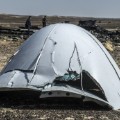
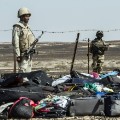
    At the crash site in the Sinai, emergency workers and aviation experts from Russia and Egypt searched the barren terrain for more bodies and examined the debris.
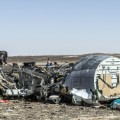
    Teams finished combing a 20-square kilometer (7.7-square mile) area for bodies by afternoon and expanded the search to a 30-square kilometer (11.6 square mile) area. Russian Emergency Situations Minister Vladimir Puchkov promised they will not rest until all victims' remains are found.
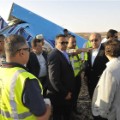
    Investigators from France and Germany, representing Airbus, and from Ireland, where the plane was registered, were to join investigators in Egypt.
    White House press secretary Josh Earnest said the U.S. offered support for the investigation, but he added that he's not aware of any resources that have been dedicated to it so far.
    "Rather than speculating on what may have led to this terribly tragic incident, we're going to allow the investigation to move forward to try to get the bottom of what happened," he said.
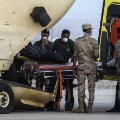
    A Russian government plane brought 130 bodies and partial remains to St. Petersburg. The city is holding three days of mourning through Tuesday.
    In his first public appearance since the crash, Putin described it as an "enormous tragedy" and said his thoughts are with the families of the victims.
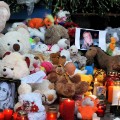
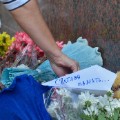
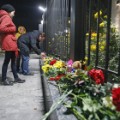
    Mourners have been coming to St. Petersburg's airport since Saturday with flowers, pictures of the victims, stuffed animals and paper planes. Others went to churches and lit candles in memory of the dead.
    Sunday was a national day of mourning, and flags flew at half-staff across Russia.
    ___
    Isachenkov reported from Moscow. Associated Press writers Nataliya Vasilyeva and Katherine Jacobsen in Moscow, Joan Lowy and Ken Dilanian in Washington, Lori Hinnant in Paris and Jill Lawless in London contributed to this report.